
The first 30 days of a demo account: what to actually do, and what to avoid
A structured 30-day plan for using a trading demo account the way it was meant to be used — observation first, journal second, paper trades last. The exact week-by-week cadence we run with Tradoki cohorts, and why rushing the demo phase is the single most common mistake.
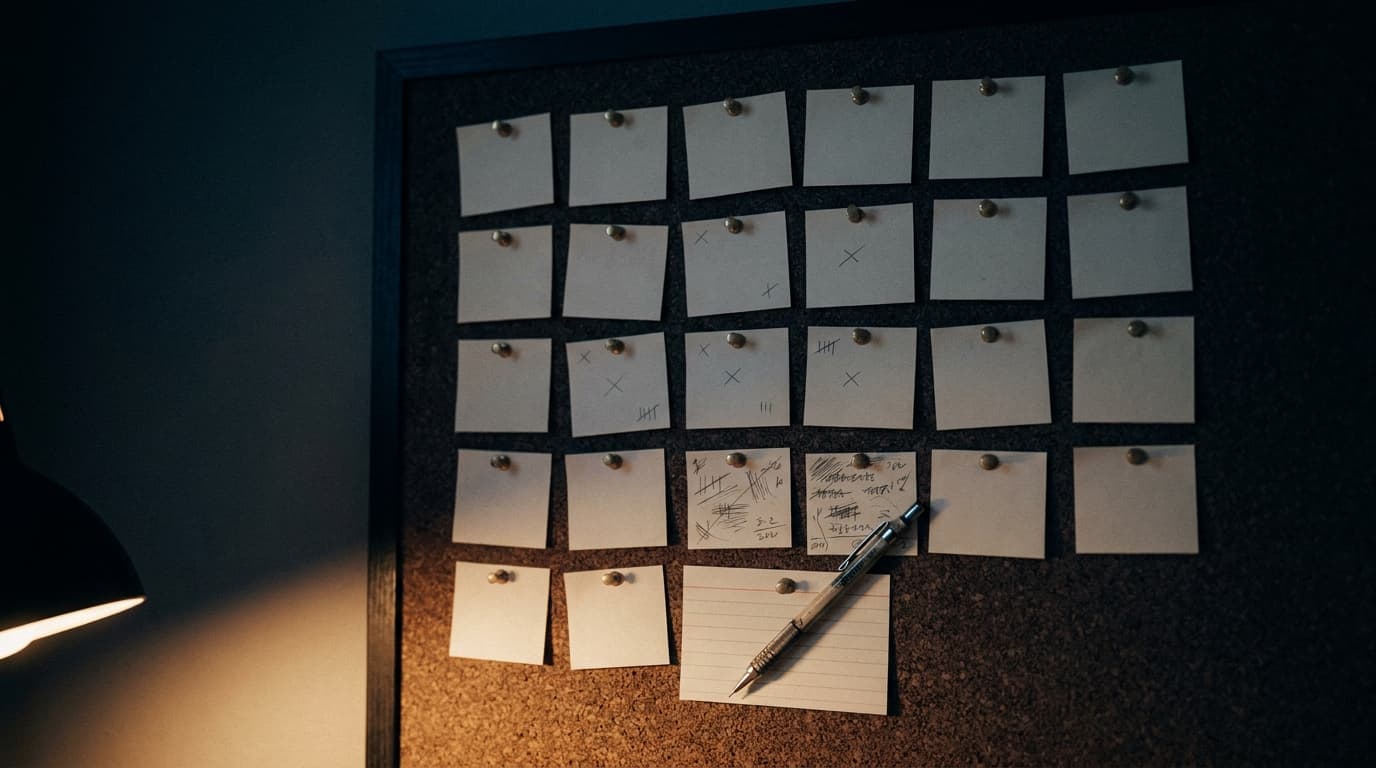
A demo account is the cheapest tool in trading and almost no beginner uses it correctly. The standard pattern is to open one, place a trade within the first hour, blow the paper account up inside a week, and conclude either that trading is
A demo account is the cheapest tool in trading and almost no beginner uses it correctly. The standard pattern is to open one, place a trade within the first hour, blow the paper account up inside a week, and conclude either that trading is easy or that demo is unrealistic. Neither conclusion is what the demo was for. The first thirty days of a demo are not about learning to trade. They are about building the observation discipline, the journal habit, and the process scaffolding that carry a trader through the next five years. Do the first thirty days wrong and the next five years are built on sand. Do them right and the rest of the path is meaningfully shorter.
Why the demo phase is misunderstood
Most beginner content frames demo as "practice for live." That framing is wrong in the way that matters. Demo is not a scaled-down version of live; it is a different activity. Live trading is performance under financial pressure. Demo is learning under no financial pressure. Treating it as rehearsal is a category error that costs most beginners their first account.
The framing we use in cohorts: demo is where you build the parts of your process the market cannot teach you, because the market is too noisy a teacher once money is involved. You cannot build a journal habit during a live drawdown. You cannot calibrate pattern recognition while P&L emotion rewrites every chart. The demo account is the only low-noise environment retail has.
The beginner's guide to trading in 2026 lays out the skill order. The demo phase is the substrate for the first three: risk framework, market structure familiarity, and a journal that survives. Everything after — deliberate practice, strategy, live execution — rests on whether the demo phase was run properly or rushed.
Days 1–7: choose one market and watch it
The first week has one job: pick one market, set up the environment, and watch. No trades. No signal alerts. No auto-analysis.
The setup on day one is minimal on purpose. Open a free demo account at a regulated broker in your jurisdiction. Connect TradingView or the platform's native charting. Pick one instrument — EUR/USD, the DAX, SPX, or a single major crypto are the categories most cohorts choose from. Pick one timeframe that matches the hours you can be at the screen; if you work full-time, the fifteen-minute or hour timeframe is realistic, not the one-minute.
The next six days are observation. Each day, open the chart during your chosen session window. Watch for thirty to forty-five minutes. Write three things in your notebook: what price did in that window, what the session looked like structurally (trending, ranging, consolidating, news-driven), and one thing that surprised you. Nothing else. Do not annotate with indicators you do not understand.
The point is to build a baseline sense of how the instrument actually behaves. Most retail traders jump straight to strategy execution without ever sitting through a full session of unfiltered observation on the specific instrument they intend to trade. A week of observation is a small investment; it is also the first thing most beginners skip.
The second task during week one is reading, not trading. Re-read the risk-of-ruin pillar guide. Work through the sizing math for the account size you will fund later. Write down the R-value — the fixed-risk amount per trade, as a percentage of account — that your framework produces. This is the number that governs every trade you will ever take on this account.
No trades yet. Not one.
Days 8–14: introduce the journal and start paper trading
Week two is where paper execution enters. Cap it hard at two paper trades per week, maximum. The target is not volume; it is journal quality.
The journal is the full Tradoki trading journal template. Twelve fields. Pre-trade paragraph written before entry. Pre-trade screenshot. Explicit entry rule, invalidation, target, and R. All of it, every time. The fact that the trade is on demo does not earn a discount on any field. Run the journal the way you would run it on live size; the habit you build on demo is the habit you carry into live.
The rule during weeks two through four: no trade unless the pre-trade paragraph is written first. If you cannot articulate the setup in three to five sentences before clicking buy, the trade does not happen. This is where most demo journals fail — beginners skip the paragraph because the trade "feels obvious" and the paragraph feels like friction. The friction is the point.
Setup selection in week two is disciplined too. Pick one setup from your written playbook. Not five. Not "whatever looks good." One. Same rules, same invalidation logic, same instrument and timeframe from week one. If the setup does not occur for three days, take zero trades. Forcing a trade when the setup is absent is the failure pattern that will ruin live execution later.
By end of week two the expected state is: four observation sessions logged, zero to two paper trades journaled fully, one R-value written down, a one-page playbook. No P&L expectations. The journal is the deliverable.
Days 15–21: review, pattern recognition, and the first post-mortem
Week three introduces the post-mortem. The post-mortem questions are the same four every cohort uses: did I follow my rules, what was R when I did, what was R when I did not, and what is the recurring failure mode?
The twist is that you will almost certainly not have enough trades to run the post-mortem cleanly. Two to four paper trades is not a sample. That is fine. The exercise in week three is not drawing conclusions; it is running the process on the data you have, however thin.
Sit down on Saturday morning. Open the journal. For each trade, re-read the pre-trade paragraph first, before looking at the outcome. Ask whether the argument held up, independently of whether the trade made money. Then look at the outcome. Then write the four answers. Then write a one-paragraph summary of the week: what worked, what did not, what you want to change for week four.
Do this even if the sample is two trades. Especially if. The skill being built is the review cadence itself, not the content of any particular review. Cadence beats content in the first three months.
Alongside the post-mortem, week three begins targeted pattern-recognition practice. Open bar replay on your instrument. Scroll forward one bar at a time and mark whether the setup is present, forming, or absent. Fifteen to twenty reps per day. Call them only; do not trade.
The ninety-day deliberate practice plan covers replay work in depth. Week three is an early taste; the full arc begins after the first thirty days are complete.
— Cohort reflection, week three recap, 2026 Q1 cohort"The first post-mortem I ran had two trades in it. I was embarrassed by how thin the sample was. Sitting down and running the four questions anyway, on the two data points I had, was the moment the process became real. Four weeks later I had a dataset that actually supported a conclusion, and a habit that would not have existed if I had waited for the data to be thick enough."
Days 22–30: introduce realistic scenarios, still on paper
Week four is where the demo phase starts producing data that looks like what live will produce, while still running entirely on paper size.
Three changes. First, remove the cap on paper trades. If your setup occurs and your rules say trade it, trade it. The two-per-week cap in weeks two and three was scaffolding, not a permanent rule. If you take ten paper trades because the setup occurred ten times, good. If you take zero because the regime did not suit, also good. What is not legitimate is taking trades outside the setup because you are bored.
Second, introduce realistic execution friction. Add the typical spread on your instrument to your entry price manually in the journal. Model the slippage you would see on a live fill. Hold positions through the overnight rollover if the strategy requires it, and log the swap cost from the broker's published rate. The demo platform attenuates all of these; modelling them explicitly is how you stop your demo P&L from being an unrealistic version of live P&L.
Third, observe your reactions to adverse moves. When a trade runs against you hard in the first fifteen minutes, note whether you were tempted to move the stop, close early, or double down. None of these should happen under the rules, but the temptation is important data. Demo is the cheapest place in a career where the temptation gets recorded without real money on the line.
By day thirty the journal should contain four to twenty paper trades depending on cadence, four weekly reviews, a written playbook, a written R-value, and a documented discipline score — rule-followed trades over total trades. The discipline score is the headline metric for the demo phase. Not P&L. Not win rate.
The threshold to consider transitioning out of pure demo is a discipline score above seventy-five percent combined with an honest self-assessment that the journal habit survived all four weeks without backfilling from memory. If either is not true, run another thirty days with tighter enforcement.
What to avoid, structurally
A short list of patterns we have watched ruin the demo phase.
Treating demo P&L as a score. A student who ends the month up fifteen percent on demo and concludes they are ready to go live is the most common preventable failure. Demo P&L is noise. The discipline score generalises; the P&L does not.
Running multiple setups on multiple instruments. Pattern recognition does not consolidate across five setups in thirty days. Breaking the one-setup constraint produces a journal full of loosely-related trades rather than a deep look at one setup.
Backfilling entries from memory. Writing the pre-trade paragraph after the trade closed is not journaling; it is storytelling. If you miss an entry, label the trade "no journal" and exclude it from the post-mortem. Better to lose a data point than pollute the dataset.
Skipping the weekly review when the sample is thin. The review is a cadence habit. A review with two trades in it is still a review, and it is the review that builds the habit.
Going live at day thirty-one regardless of discipline score. The calendar is not the signal; the discipline score is.
What comes after day thirty
Not "go live with full size." The answer is the ninety-day deliberate practice plan, which takes the foundation built here and adds structured replay reps, execution practice, and a minimum-size live phase. The thirty-day demo plan is the scaffolding; the ninety-day plan is the build.
A trader who walks into day thirty-one with a working journal, a written playbook, a computed R-value, and an honestly-measured discipline score has a foundation most retail traders never build. Over a year, structured deliberate practice on a thin but real set of habits produces a different trader than five years of trial-and-error ever will.
We are not promising profitability at day thirty or at day one hundred and twenty. We are promising that if the foundation is honest, the work that follows has somewhere to stand. The beginner's guide is the roadmap for the first year; this article is the first month of that roadmap, in the format we have watched work in cohort after cohort.
The demo account is almost free. The first thirty days are almost free. The only cost is the discipline to run them properly — and the discipline is what the phase is for.
● FAQ
- How long should you use a demo account before trading live?
- There is no universal number, but ninety days of structured practice is a far better baseline than the two-week surface most brokers suggest. The first thirty days are about observation and journal habits; the next sixty are where paper execution and review start producing usable data. Anyone graduating off demo before they have run a full post-mortem cycle is graduating early.
- Should you place a trade on day one?
- No. The first week is observation and setup only. A beginner who opens a demo account and clicks buy on day one has skipped the prerequisite: actually watching how the market they have chosen behaves without having skin in the outcome. Skipping the observation phase is the single most common failure pattern we see.
- Is demo trading realistic compared to live?
- Partially. Spread, latency, and emotional pressure are all attenuated on demo. What demo does capture well is market structure, strategy mechanics, and the trader's own process discipline — and those three are where the first thirty days of learning actually happen. Live friction gets added later, deliberately, at minimum size.
- What should I journal on a demo trade?
- Exactly what you would journal on a live trade. Same fields, same template, same pre-trade paragraph. If your journal is different on demo than on live, neither version is doing its job. The journal is where the habit is built, and the habit has to survive the transition.
- When do I know I am ready to go live?
- When you have completed a full thirty-day observation-and-paper cycle, run at least two weekly post-mortems, computed your discipline score honestly, and your discipline score is above seventy-five percent on rule-followed entries. Not when the P&L on demo looks good. Discipline is the signal; P&L on demo is noise.
Three more from the log.

What is a demo account? Paper trading, explained
Demo account, paper trading, trading simulator — same product, three labels. What they actually are, what they teach you, and the four ways every demo lies.
May 04, 2026 · 10 min
Daily Loss Limit vs. Max Loss Limit: The Reset Nobody Reads
Topstep's own help center says hitting your Daily Loss Limit isn't a violation. Your Maximum Loss Limit runs on a different clock, and it never resets.
Sep 12, 2026 · 7 min
Why 'Once Per Bar Close' Alerts Still Fire Late
TradingView's own support docs explain the confirmation logic behind alert delay, and why the webhook relay is rarely where the real bottleneck hides.
Sep 05, 2026 · 7 min